
If you’ve noticed something “off” about your Cheyenne yard lately, maybe patches of dead grass, strange trails through the lawn, or plants that seem to be dying for no reason, you might have a vole problem. These small, mouse-like rodents are surprisingly destructive, and they’re more common in Wyoming than many homeowners realize.
We’ve seen firsthand how much damage voles can cause to local landscaping, and the worst part? Most people don’t even know they have an infestation until it’s already done significant harm. Voles work quickly, reproduce even faster, and prefer to stay hidden, which makes catching them early absolutely critical.
In this guide, we’ll walk you through the four telltale signs of a vole infestation in your Cheyenne yard. Knowing what to look for can save you hundreds (or even thousands) of dollars in landscaping repairs. Let’s dig in.
What Are Voles and Why Are They a Problem in Cheyenne?
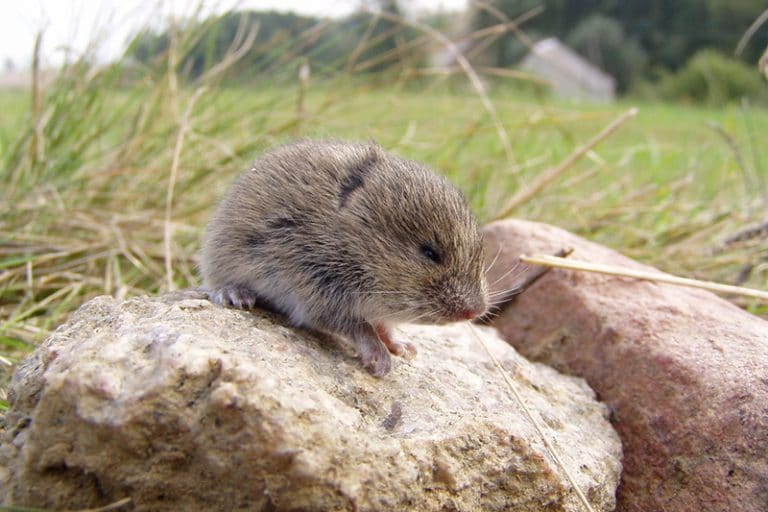
Before we get into the warning signs, let’s clear up a common confusion: voles are not moles. While they sound similar, these are completely different animals with different behaviors. Voles are small rodents, typically 4 to 8 inches long, with compact bodies, short tails, and small ears. They look a bit like mice, actually, which is why they’re sometimes called “meadow mice” or “field mice.”
So why are voles such a headache for Cheyenne homeowners specifically? A few reasons.
First, our climate suits them well. Voles thrive in areas with plenty of ground cover, grass, mulch, leaf litter, and snow cover during winter months. Cheyenne’s landscape provides exactly what they need to establish colonies and breed. And breed they do. A single female vole can produce up to 10 litters per year, with each litter containing 3 to 6 young. Do the math, and you’ll see how a small vole problem becomes a big one fast.
Second, voles are herbivores with a voracious appetite. They feed on grass roots, bulbs, tubers, bark, and the root systems of trees and shrubs. Unlike moles, which primarily eat insects and grubs, voles are actively destroying your plants from below and above ground. We’ve seen beautiful yards in Cheyenne completely ravaged by vole activity in just a single season.
Third, and this is important, voles don’t hibernate. They’re active year-round, meaning they continue feeding and tunneling even through Wyoming’s harsh winters. In fact, winter is when they often cause the most damage because they tunnel under the snow where you can’t see them.
The bottom line? Voles are more than just a nuisance. They’re a serious threat to your landscaping investment, and recognizing the signs early is your best defense.
Surface Runways and Tunnels in Your Lawn
The most obvious sign of a vole infestation is the presence of surface runways crisscrossing your lawn. These runways are essentially above-ground trails that voles create by repeatedly traveling the same paths through grass and vegetation. Over time, their constant movement wears down the grass, leaving visible trails about 1 to 2 inches wide.
Think of them like tiny highways. Voles use these runways to navigate between their burrows, food sources, and nesting areas while staying protected from predators. The trails are usually partially hidden by overhanging grass or ground cover, which is why you might not notice them right away, especially if your lawn is on the longer side.
We often hear from Cheyenne homeowners who first spot these runways after mowing their lawn short or after spring snowmelt. That’s when the damage becomes suddenly, shockingly visible. You might go from thinking your yard looks fine to seeing an intricate network of trails overnight. It’s not that the damage happened overnight, it’s just that the snow or tall grass was hiding it.
How to Identify Vole Runways
Vole runways have some distinctive characteristics that set them apart from other lawn issues:
- Width: Runways are typically 1 to 2 inches wide, just wide enough for a vole’s body.
- Appearance: The grass along the runway is either flattened, dead, or completely worn away, exposing bare soil.
- Pattern: Runways often connect in a network pattern, linking burrow entrances and feeding areas.
- Location: You’ll usually find them in areas with dense vegetation, near garden beds, along fence lines, or under shrubs.
To check for active vole runways, part the grass along a suspected trail and look for fresh droppings (small, greenish-brown pellets) or signs of recent gnawing. Fresh clippings of grass stems near the runway are another indicator that voles are currently using that path.
If you’re seeing multiple interconnected runways across your lawn, that’s a strong sign you’re dealing with more than just one or two voles. Colonies can contain dozens of individuals, and those runways represent their established territory.
Gnaw Marks on Trees, Shrubs, and Plants
Voles don’t just damage your lawn, they go after your trees, shrubs, and ornamental plants too. One of the clearest signs of vole activity is gnaw marks on the bark of young trees and shrubs, particularly near the base.
Here’s what happens: voles gnaw on bark to feed on the nutrient-rich cambium layer just beneath the surface. They tend to target the lower portions of trees and shrubs, typically at or just below ground level. During winter, when food is scarce and snow provides cover, voles will gnaw bark as high as the snow line reaches.
The damage often looks like irregular, patchy scraping marks with visible tooth grooves. The grooves are small, about 1/8 inch wide, and run in various directions. If a vole gnaws bark all the way around a tree trunk or shrub stem (a process called girdling), it cuts off the plant’s ability to transport nutrients and water. Girdled trees and shrubs will often die, sometimes within a single growing season.
We’ve seen young fruit trees, ornamental shrubs, and even established landscaping plants killed by vole girdling here in Cheyenne. It’s particularly heartbreaking when homeowners lose trees they’ve been nurturing for years.
Beyond bark damage, voles also eat:
- Flower bulbs (tulips, lilies, and other spring bulbs are favorites)
- Root vegetables in gardens
- The roots and crowns of perennial plants
- Seeds and seedlings
If you’ve planted bulbs in the fall only to have them never emerge in spring, voles may be the culprit. Similarly, if perennial plants that should be established seem to be dying or failing to thrive, check the root zone. Voles often consume roots from below while the plant appears healthy above ground, until it suddenly collapses.
To check for vole damage on trees and shrubs, carefully examine the bark at the base of the plant. Pull back any mulch or ground cover and look for the telltale gnaw marks. Also look for leaning trees, if voles have damaged the root system extensively, a tree may start to lean or become unstable.
Small Round Holes Throughout Your Yard
Another classic sign of vole infestation is the presence of small, round holes scattered across your yard. These are entrances to vole burrows, underground tunnel systems where voles nest, store food, and shelter from predators and weather.
Vole burrow entrances are typically about 1 to 1.5 inches in diameter. They’re usually found in protected areas: at the base of trees or shrubs, along fence lines, under dense ground cover, or hidden within thick grass. Unlike mole holes, which are often surrounded by mounds of excavated dirt, vole holes are generally clean and unobstructed. Voles don’t push soil to the surface the way moles do.
The number of holes can be eye-opening. A single vole burrow system can have multiple entrances, and if you have a colony living in your yard, you might find dozens of holes once you start looking. We’ve walked properties in Cheyenne where homeowners counted 30, 40, or more burrow entrances across their lawn and garden beds.
To distinguish vole holes from other animal burrows:
- Size matters: Vole holes are roughly the diameter of a golf ball. Larger holes likely belong to other animals like ground squirrels or chipmunks.
- Location: Vole holes are often connected to surface runways. Follow a runway, and it’ll frequently lead to a burrow entrance.
- Lack of mounding: Again, voles don’t create the characteristic soil mounds that moles leave behind.
If you find holes near damaged plants or along those telltale surface runways, you’re almost certainly dealing with voles. The burrow system extends underground and can be quite extensive, with tunnels running 4 to 6 inches below the surface and connecting multiple nest chambers and food storage areas.
One thing we should mention: finding a few holes doesn’t automatically mean you have a major infestation. But if those holes are accompanied by the other signs we’ve discussed, runways, gnaw marks, and grass damage, it’s time to take action.
Damaged or Dead Patches of Grass
The fourth major sign of a vole infestation is damaged or dead patches of grass throughout your lawn. This type of damage can be particularly frustrating because it’s often mistaken for other lawn problems like fungal disease, drought stress, or grub damage.
Voles cause grass damage in two primary ways. First, their surface runways kill the grass along their travel paths, creating those linear dead zones we discussed earlier. Second, and more destructively, voles feed on grass roots and the crowns of grass plants, killing patches of turf from below.
When voles attack the root system, you’ll notice irregularly shaped patches of grass that turn yellow, then brown, and eventually die. These patches might seem to appear suddenly, but the damage has actually been occurring underground for some time. The grass simply can’t survive once enough of its root system has been consumed.
Here’s how to tell if your dead grass patches are caused by voles rather than other issues:
- Look for associated signs: Are there runways connecting the dead patches? Burrow holes nearby? Gnaw marks on adjacent plants? If so, voles are the likely culprit.
- Check the timing: Vole damage is often most visible in early spring after snow melts, revealing damage that occurred over winter. If you wake up to a devastated lawn in March or April, winter vole activity is probably to blame.
- Examine the grass: Pull up some of the dead grass. If the roots are gone or severely damaged and you can see evidence of gnawing, that points to voles.
- Test for grubs: If you’re not sure, dig up a section of dead turf and look for grubs (the C-shaped larvae of beetles). No grubs + the other vole signs = vole damage.
We’ve seen Cheyenne lawns where vole damage covered 30% or more of the total yard area. At that point, you’re looking at significant reseeding or resodding costs just to restore the lawn. And until the voles themselves are dealt with, any new grass you plant is just providing them with a fresh food source.
The dead patches also tend to spread if the infestation continues unchecked. Voles expand their territory as the colony grows, so what starts as a few damaged spots can eventually consume large portions of your yard.
What to Do if You Spot These Signs
So you’ve walked your property, and the evidence is clear: surface runways crisscrossing the lawn, gnaw marks on your shrubs, small round holes dotting the landscape, and dead patches of grass spreading across the yard. What now?
First, don’t panic, but don’t wait, either. Vole populations can explode quickly, and the longer an infestation continues, the more extensive (and expensive) the damage becomes. Early intervention is always more effective and affordable than trying to recover a yard that’s been devastated by months or years of vole activity.
Here are some immediate steps you can take:
Reduce habitat: Voles love cover. Keep your lawn mowed short, especially in fall before snow arrives. Remove dense ground cover, leaf litter, and excessive mulch near trees and garden beds. Clear tall grass and weeds from fence lines and property edges.
Protect vulnerable plants: Wrap the base of young trees and shrubs with hardware cloth or tree guards, burying the bottom edge a few inches into the soil. This prevents voles from girdling the bark.
Remove attractants: Clean up fallen fruit, spilled birdseed, and other food sources that might draw voles to your yard.
But, if you’re already seeing multiple signs of an established infestation, DIY methods often aren’t enough. Voles breed rapidly, live underground where they’re protected, and are notoriously difficult to eliminate once entrenched. Traps and repellents can reduce numbers temporarily, but without addressing the full colony and its extensive burrow system, the problem typically returns.
That’s where professional pest control comes in. At Best Pest Control, we specialize in vole removal for Cheyenne properties. We’ll inspect your yard to assess the extent of the infestation, identify active burrows and runways, and develop a comprehensive treatment plan to eliminate the colony and protect your landscaping from future damage.
Our approach is thorough. We don’t just treat the symptoms, we target the source. And because voles can cause damage year-round, we’ll also advise you on preventive measures to keep them from coming back.
If voles are destroying your Cheyenne yard, don’t wait for the damage to get worse. Contact Best Pest Control today, and let us protect your property from these destructive rodents.
Conclusion
Vole infestations are sneaky. These small rodents work quietly, often out of sight, causing damage that only becomes apparent when it’s already extensive. But now you know what to look for: surface runways and tunnels, gnaw marks on trees and shrubs, small round burrow holes, and those frustrating dead patches of grass.
The key is catching the problem early. Walk your Cheyenne property regularly, especially in early spring and late fall when vole damage tends to be most visible. Look for the signs. Check the base of your trees and shrubs. Follow those suspicious trails through the grass.
And if you find evidence of voles? Act quickly. The longer you wait, the more damage they’ll do, and the harder they’ll be to eliminate.
We’re here to help. At Best Pest Control, we’ve been tackling vole infestations in Wyoming for years, and we know how to get rid of them for good. Whether you’re dealing with a few suspicious signs or a full-blown infestation, reach out to us. We’ll protect your yard, your landscaping investment, and your peace of mind.
